
Managed IT Services · 5 min read
When should a business move from reactive IT to managed IT?
Many businesses begin with a reactive approach to IT support. When something breaks, they call for help. While this approach may work for very small environments, technology becomes increasingly important as a business grows. At some point, waiting for problems to occur often becomes more expensive than preventing them.
Reactive IT support, often called break-fix support, focuses on solving problems after they occur. Managed IT services take a different approach by emphasizing monitoring, maintenance, planning, and proactive support designed to reduce disruptions before they impact the business.
The question for many organizations is not whether managed IT services are valuable. The question is when the transition makes sense.
What reactive IT looks like
In a reactive environment, technology issues are addressed only when users report problems. A server fails, an email account stops working, a laptop develops issues, or software stops functioning properly. Support is requested after productivity has already been affected.
While this model may seem cost-effective initially, costs often become less predictable as the business grows.
Downtime, employee frustration, emergency service calls, and delayed projects can all increase over time.
Signs a business may be outgrowing reactive IT
Several indicators suggest a business may benefit from a more proactive technology strategy.
Technology problems are becoming more frequent. Recurring issues often indicate underlying problems that require ongoing management rather than occasional repairs.
Downtime is impacting productivity. If employees regularly lose time due to technology problems, the business may benefit from proactive monitoring and maintenance.
Cybersecurity concerns are increasing. Modern security requires ongoing updates, monitoring, MFA management, backup oversight, and access control reviews.
The business relies heavily on cloud platforms. Microsoft 365, SharePoint, Teams, cloud applications, and remote work environments benefit from ongoing administration and security management.
There is no clear IT strategy. Technology planning becomes increasingly important as systems, users, and business requirements expand.
The cost of waiting for problems
Many organizations focus on the cost of IT support while overlooking the cost of downtime.
Lost productivity, missed opportunities, delayed customer service, and operational disruptions can often exceed the cost of proactive technology management.
A single unexpected outage may impact dozens of employees simultaneously.
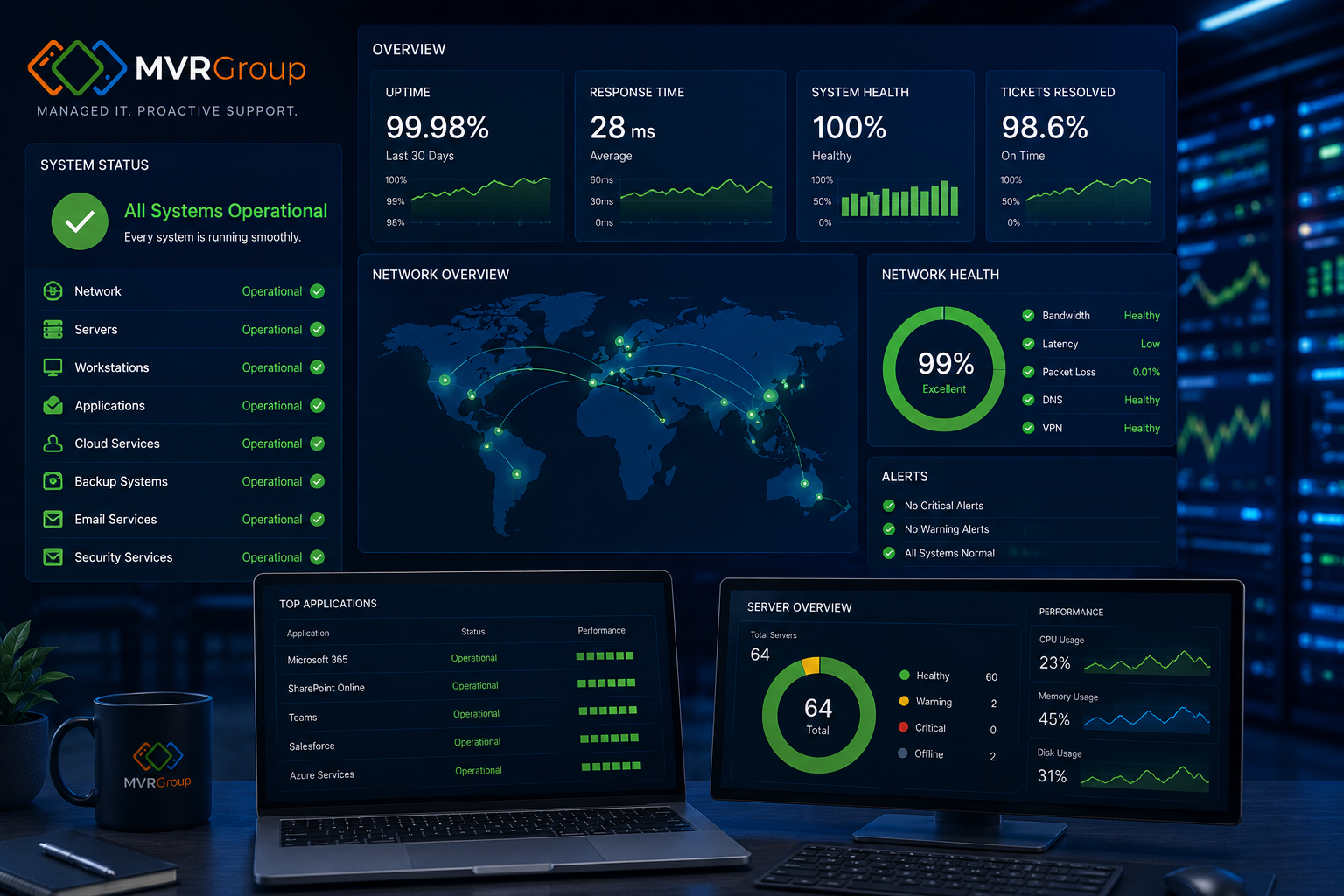
Proactive monitoring helps businesses identify issues early, improve uptime, and reduce technology disruptions.
Managed IT focuses on prevention
Managed IT services help businesses shift from reacting to problems toward preventing them whenever possible.
Common managed IT services include:
24/7 monitoring of systems, devices, and critical services.
Patch management to keep systems updated and secure.
Backup monitoring to improve recovery readiness.
Security management including MFA, endpoint protection, and access controls.
Help desk support for day-to-day user issues.
Technology planning to support future business growth.
The goal is not simply to fix problems faster. The goal is to reduce how often problems occur.
Predictable support can improve budgeting
One challenge with reactive support is cost uncertainty. Emergency service requests and unexpected projects can create budgeting challenges.
Managed IT services often provide more predictable monthly costs, making technology planning easier and reducing surprises.
Cybersecurity expectations have changed
Today's technology environment requires more than device support. Businesses must also consider cybersecurity, cloud security, backup readiness, user access management, compliance requirements, and ongoing monitoring.
These responsibilities often exceed what a reactive support model can effectively address.
Growth creates new technology demands
As organizations grow, they typically add users, devices, locations, cloud services, and business applications. Technology management becomes more complex and often requires greater consistency.
Managed IT services help provide the structure and oversight needed to support continued growth.
Managed IT is not only for large businesses
Some organizations assume managed IT services are only appropriate for large enterprises. In reality, many small and mid-sized businesses benefit significantly from proactive monitoring, maintenance, cybersecurity support, and strategic guidance.
The value often comes from reducing risk, improving reliability, and helping internal teams focus on business priorities instead of technology issues.
Final thought
Reactive IT support can work for a period of time, but growing businesses often reach a point where waiting for problems becomes costly and disruptive.
Frequent issues, downtime, cybersecurity concerns, cloud adoption, and business growth are all indicators that a more proactive approach may be beneficial. Managed IT services help organizations improve reliability, strengthen security, and create a technology environment that better supports long-term business goals.
Thinking about moving to managed IT?
MVR Group helps businesses improve reliability, reduce downtime, strengthen cybersecurity, and build a proactive technology strategy that supports long-term growth.
Schedule A Free Consultation