
Business Continuity · 5 min read
Backup readiness is not the same as having backups
Many businesses believe they are protected because they have backups in place. While backups are an important part of business continuity, backup readiness involves much more than simply storing copies of data. The real question is whether your business can successfully recover when something goes wrong.
Backups are often viewed as a checkbox item. A backup system is installed, reports appear to be running, and everyone assumes data can be restored if needed. Unfortunately, many businesses discover gaps in their backup strategy only after a system failure, cyberattack, or accidental deletion occurs.
Backup readiness focuses on recovery. It answers the question that matters most: if something happens tomorrow, how quickly can your business get back to work?
Having backups does not guarantee recovery
A backup file is only valuable if it can be restored successfully. Businesses sometimes discover that backups were incomplete, corrupted, misconfigured, or not protecting critical systems.
Without regular validation and testing, there is no guarantee that backups will perform as expected during an emergency.
The goal is not simply to create backups. The goal is to create confidence that recovery will work when it matters most.
What backup readiness actually means
Backup readiness combines technology, processes, monitoring, and recovery planning.
Backup verification helps confirm that backup jobs complete successfully and that protected systems are included.
Recovery testing validates that files, applications, and systems can be restored properly.
Documentation provides clear recovery procedures so staff know what actions to take during an outage.
Monitoring helps identify backup failures before they become larger problems.
Recovery planning establishes priorities for restoring critical business systems.
Together, these elements create a more reliable recovery strategy than backups alone.
Know what needs protection
One of the most common issues businesses face is uncertainty about what is actually being backed up. Critical business applications, cloud services, Microsoft 365 data, shared files, accounting systems, and line-of-business applications may all have different backup requirements.
Understanding where business data lives is a critical step toward building an effective recovery plan.
Businesses should regularly review what data is protected, where backups are stored, and how long data is retained.
Recovery time matters
A backup strategy should not focus only on whether data can be recovered. It should also address how quickly recovery can occur.
For some businesses, restoring a few files may be acceptable. For others, even a few hours of downtime can significantly impact operations, customer service, and revenue.
Recovery objectives help determine acceptable downtime and guide backup planning decisions.
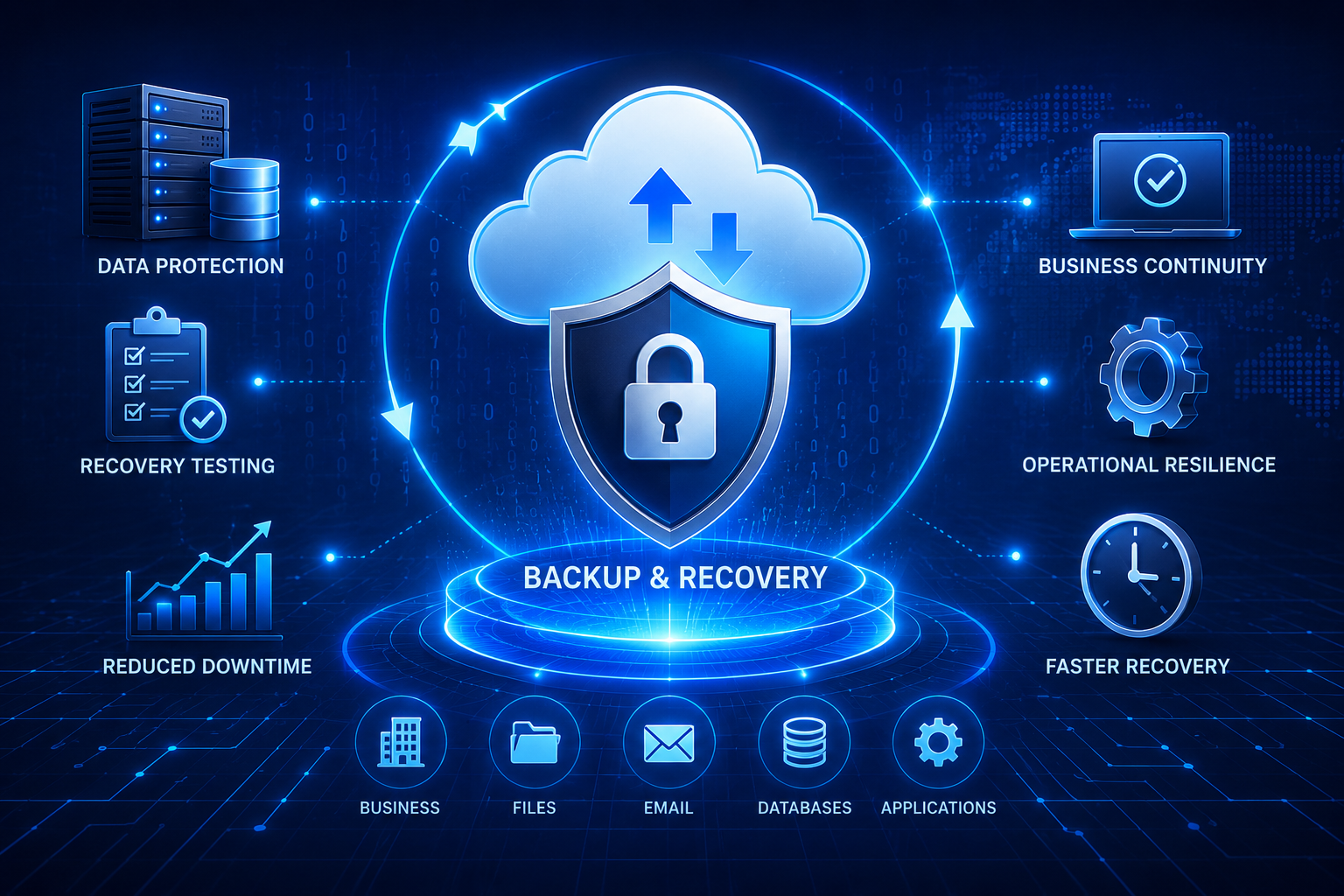
Backup readiness focuses on successful recovery, not simply creating backup copies.
Cybersecurity and backups go together
Modern ransomware attacks often target backups along with production systems. This makes backup security an important part of cybersecurity planning.
Organizations should review backup storage security, access controls, retention policies, and protections against unauthorized changes.
A backup strategy that cannot withstand a cyberattack may not provide the protection a business expects.
Testing should be routine
Recovery testing is one of the most overlooked aspects of backup readiness. Many organizations rarely perform restoration testing until a real incident occurs.
Regular testing helps identify problems early, verify recovery procedures, and build confidence in the recovery process.
Testing also provides an opportunity to measure how long recovery actually takes.
Cloud data still requires planning
Businesses increasingly rely on cloud services such as Microsoft 365, SharePoint, Teams, and OneDrive. While cloud platforms provide availability and redundancy, organizations should still understand their recovery responsibilities.
Cloud adoption does not eliminate the need for recovery planning. It simply changes where data resides and how recovery may be performed.
Business continuity depends on readiness
The purpose of backups is not to create copies of data. The purpose is to support business continuity when unexpected events occur.
Backup readiness helps businesses recover faster, reduce downtime, and maintain operations during disruptions. It shifts the conversation from simply storing data to ensuring recovery success.
Final thought
Having backups is important, but true protection comes from backup readiness. Verification, monitoring, testing, documentation, and recovery planning all work together to improve resilience.
Businesses should regularly review their backup strategy to ensure they are prepared not only to store data, but also to restore it quickly when recovery becomes necessary.
Unsure if your backups are recovery-ready?
MVR Group helps businesses evaluate backup strategies, recovery procedures, monitoring, and business continuity planning to improve resilience and reduce downtime.
Schedule A Free Consultation